Pakistan’s textile industry is one of the country’s most energy-intensive sectors. From spinning and weaving to dyeing, processing, stitching, and finishing, textile mills require continuous and stable electricity to maintain production quality and meet delivery timelines.
However, rising electricity tariffs, power outages, voltage fluctuations, and peak-hour energy costs are creating major challenges for textile manufacturers. Even a short power interruption can stop machinery, damage production flow, affect fabric quality, and increase operational losses.
This is why energy storage is becoming an important solution for textile industries in Pakistan. With a modern Battery Energy Storage System, also known as BESS, textile mills can store electricity and use it when needed for backup, stability, and cost optimization.
For industrial energy solutions, Beacon Energy provides smart solar and storage systems designed for commercial and industrial users in Pakistan.
Why Textile Industries Need Energy Storage
Textile mills operate with heavy machinery and continuous production cycles. Equipment such as spinning machines, looms, compressors, boilers, dyeing machines, finishing units, lighting systems, motors, and HVAC systems require a stable power supply.
When the grid supply is unstable, production can be affected immediately. Machines may stop unexpectedly, batches may be delayed, and quality control can become difficult. For export-focused textile businesses, downtime can also lead to missed deadlines and financial penalties.
Energy storage helps textile industries reduce these risks by providing stored power during outages, peak demand hours, or grid instability. It gives mills more control over electricity usage and improves overall operational reliability.
What Is BESS for Textile Mills?
BESS stands for Battery Energy Storage System. It stores electrical energy and supplies it when required.
For textile mills, BESS can be connected with solar systems, grid supply, and critical production loads. During the day, solar panels can generate electricity for operations. If there is excess solar energy, it can be stored in batteries and used later during peak hours, evening shifts, or power failures.
A BESS usually includes battery modules, inverters, battery management systems, safety equipment, energy management software, and monitoring tools.
Beacon Energy’s BESS solutions are designed for commercial and industrial needs, helping businesses improve power reliability, reduce grid dependence, and support sustainable operations.
Energy Challenges in Pakistan’s Textile Sector
Textile businesses in Pakistan face multiple energy challenges. Electricity costs continue to increase, while grid interruptions and voltage instability can affect daily production.
Many textile mills also run extended shifts, which means energy demand continues beyond daytime solar generation hours. Without storage, excess solar energy may not always be used efficiently.
Traditional backup systems such as diesel generators can support operations during outages, but they add fuel costs, maintenance expenses, noise, and emissions.
Energy storage offers a smarter alternative. It helps mills store low-cost or solar-generated electricity and use it when power is expensive or unavailable.
How Energy Storage Improves Textile Production
Energy storage supports textile production by improving backup power and energy stability. During power outages, BESS can supply electricity to selected critical loads, helping mills avoid sudden production stoppages.
It can also support smoother operations by reducing the impact of voltage fluctuations and sudden grid interruptions. Stable electricity is especially important for textile machinery that requires consistent performance.
For textile units involved in dyeing, processing, and finishing, uninterrupted power can help maintain production quality and reduce material wastage.
With the right system design, energy storage can improve both productivity and cost efficiency.
BESS with Solar for Textile Industries
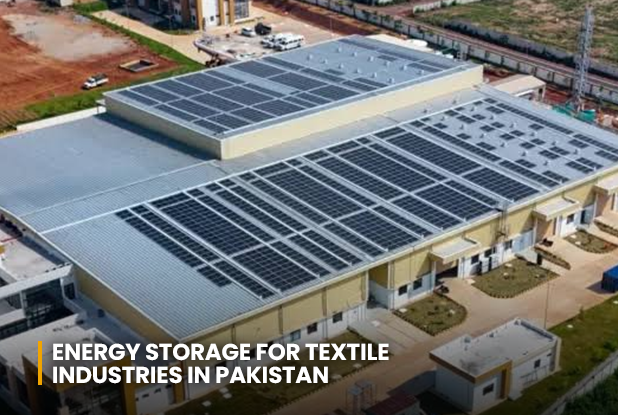
Solar energy is already becoming a popular solution for industrial businesses in Pakistan. Textile mills usually have large rooftops and high daytime electricity usage, making them suitable for industrial solar systems.
However, solar becomes even more effective when combined with battery storage. During the day, solar power can run production loads. Extra solar energy can be stored in batteries and used later when solar generation drops or grid electricity becomes expensive.
This solar-plus-storage model helps textile industries increase self-consumption, reduce grid dependency, and improve energy resilience.
For textile-focused solar solutions, Beacon Energy’s Industrial & Commercial solutions include tailored systems for textile mills, supporting spinning, weaving, and processing operations with reliable energy performance.
Benefits of Energy Storage for Textile Industries
1. Reliable Backup Power
Textile mills cannot afford repeated production interruptions. BESS provides backup power for critical systems during outages, helping businesses continue essential operations and reduce downtime.
This is especially useful for mills with continuous production lines, export commitments, and sensitive processing operations.
2. Reduced Electricity Costs
Energy storage can help textile businesses reduce electricity costs by storing solar power or lower-cost electricity and using it during expensive peak hours.
This can improve monthly energy savings and give businesses better control over operating expenses.
For industries looking to reduce electricity expenses through solar, Beacon Energy offers advanced energy solutions for businesses, industries, and homes.
3. Better Solar Energy Usage
Without batteries, extra solar energy may not always be fully utilized. BESS allows textile mills to store excess solar power and use it later.
This improves solar self-consumption and increases the value of an industrial solar investment.
Businesses can also explore Beacon Energy’s solar energy insights to learn more about solar, BESS, and energy management solutions in Pakistan.
4. Improved Power Stability
Textile machinery requires stable electricity for efficient operation. Sudden power drops, voltage changes, or outages can affect machine performance and product quality.
BESS helps support power stability by providing stored energy when the grid supply becomes unreliable.
This can be valuable for spinning, weaving, dyeing, and finishing units where consistency is critical.
5. Lower Generator Dependency
Many textile mills use diesel generators for backup power. While generators are useful, they increase fuel costs and require regular servicing.
Battery storage can reduce generator dependency and help textile businesses lower fuel consumption, maintenance costs, noise, and emissions.
In some cases, BESS can work alongside generators to create a more efficient backup strategy.
6. Support for Sustainability Goals
Textile exporters are increasingly expected to follow sustainable manufacturing practices. Using solar energy with battery storage can help reduce carbon emissions and support cleaner production.
This can strengthen a textile company’s reputation with international buyers, brands, and supply chain partners.
By choosing renewable energy solutions from Beacon Energy, textile businesses can move toward more sustainable and future-ready operations.
Where Energy Storage Can Be Used in Textile Mills
Energy storage can support different parts of a textile facility depending on the system design and backup requirement.
It can be used for lighting, IT systems, monitoring systems, compressors, selected production lines, quality control equipment, pumps, security systems, HVAC loads, and critical machinery.
For larger textile mills, BESS can be designed to support bigger operational loads and peak-hour demand management. For smaller textile units, it can support essential systems and reduce outage-related disruption.
A professional energy assessment helps determine which loads should be connected to the storage system.
How to Choose the Right BESS for a Textile Mill
Choosing the right BESS requires proper technical planning. Textile businesses should not select battery capacity randomly. The system must be designed according to actual energy usage, critical load requirements, backup duration, solar system size, and production schedule.
Important factors include daily electricity consumption, peak demand, shift timing, equipment sensitivity, available space, battery safety, monitoring system, warranty, and after-sales support.
A professional company like Beacon Energy can help textile businesses evaluate their energy needs and design the right storage solution.
Importance of Monitoring and Smart Energy Management
Modern energy storage systems are not just batteries. They include monitoring and control features that help businesses track energy usage, battery performance, solar production, and system efficiency.
For textile mills, this visibility is important because energy is a major production cost. Real-time monitoring can help management understand consumption patterns, identify inefficiencies, and improve energy planning.
Beacon Energy also highlights smart energy solutions and monitoring-enabled systems through its solar and business energy content, including topics such as AI-powered solar energy management.
Beacon Energy for Textile Energy Storage Solutions
Beacon Energy provides smart solar and battery storage solutions for industrial and commercial users in Pakistan. For textile industries, Beacon Energy can help design energy systems that reduce electricity costs, improve backup power, and support continuous production.
The company’s BESS solutions are designed to enhance power reliability, maximize renewable energy usage, and reduce reliance on the grid. Its Industrial & Commercial solar solutions also include dedicated support for textile mills and other high-consumption sectors.
Textile businesses can also review Beacon Energy projects to understand the company’s experience across commercial and industrial solar installations.
For consultation or project inquiries, textile mills can directly contact Beacon Energy.