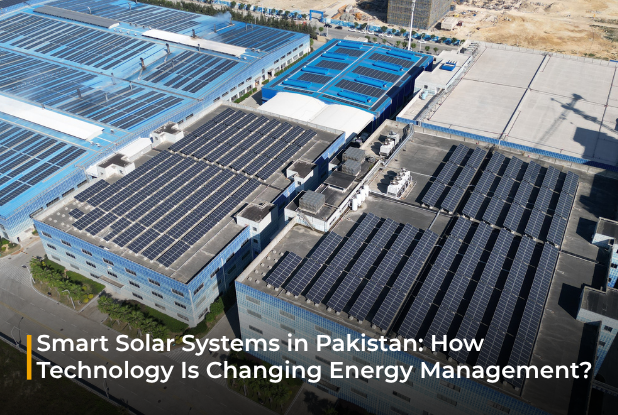
Industrial machinery is the backbone of Pakistan's manufacturing sector. From textile mills and food processing plants to steel factories, packaging units, pharmaceutical facilities, and engineering workshops, businesses depend on powerful electric motors to maintain daily production.
These motors operate essential equipment such as compressors, pumps, conveyors, ventilation systems, refrigeration units, and production machinery. However, industrial motor loads can place significant demands on electrical systems, especially during startup, periods of heavy operation, and unexpected power interruptions.
Unstable electricity, voltage fluctuations, and power outages can disrupt production, increase maintenance requirements, and affect business profitability. This is why many industrial businesses are exploring Battery Energy Storage Systems, commonly known as BESS, to improve power reliability and energy management.
When combined with solar energy, battery storage can help businesses reduce grid dependency, manage electricity consumption, and support critical industrial operations.
For companies looking for the best solar company in Pakistan, choosing a provider with expertise in industrial solar and battery storage is an important step toward building a more reliable energy infrastructure.
Beacon Energy provides renewable energy solutions for commercial and industrial customers, helping businesses explore smarter ways to generate, store, and manage electricity.
2. Understanding Industrial Motor Loads and Their Energy Requirements
Industrial motors have different electricity requirements compared with ordinary commercial appliances. While lighting, computers, and smaller equipment generally have predictable consumption patterns, industrial motors can experience significant changes in power demand depending on their operating conditions.
One of the most important considerations is motor startup. When a large motor starts, it may temporarily draw substantially more current than it requires during normal operation. This is known as starting or inrush current.
Equipment such as compressors, heavy-duty pumps, manufacturing machinery, and ventilation systems can create substantial electrical demand during startup. If the power supply cannot support these requirements, businesses may experience voltage drops, protective trips, or unsuccessful motor starts.
Motor loads can also vary throughout production. A manufacturing facility may operate several machines simultaneously, creating changing electricity demand throughout the working day.
For businesses investing in energy storage, understanding these characteristics is essential. Battery capacity alone does not determine whether a BESS can operate industrial motors successfully. The system's power conversion equipment, inverter overload capability, motor starting method, and electrical infrastructure must also be evaluated.
This is why professional energy assessment and customized engineering are important when selecting industrial solar and energy storage solutions.
3. How Battery Energy Storage Systems Support Industrial Motors
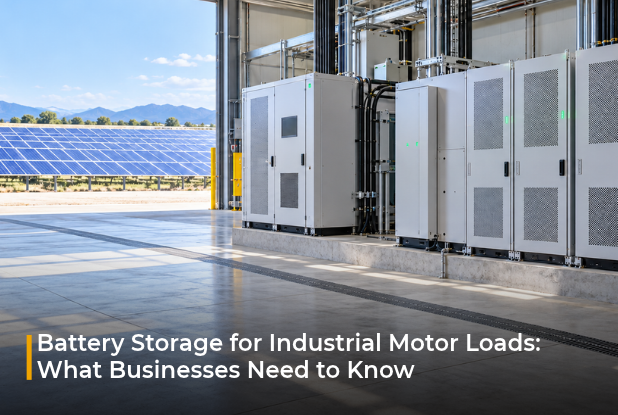
A Battery Energy Storage System stores electrical energy and supplies it when required. In industrial environments, BESS can be configured to support selected machinery, manage peak electricity demand, and improve backup power availability.
When the grid experiences an outage, a properly designed BESS with suitable backup and islanding capabilities can supply electricity to designated industrial loads. This helps businesses reduce unnecessary downtime and maintain essential operations.
Battery storage can also support energy management during periods of high demand. For example, facilities operating several motors simultaneously may benefit from controlled battery discharge that reduces electricity drawn from the grid during sustained peak-load periods.
Another important application is power stability. Depending on the system configuration, BESS power conversion technology can provide rapid power support during certain grid disturbances and load changes. However, supporting large motor startups requires careful engineering to ensure the equipment can handle the necessary starting current and duration.
Businesses may also use soft starters or variable frequency drives alongside their energy storage systems to help manage motor startup demand.
Beacon Energy's BESS solutions are designed for commercial and industrial applications, with capabilities including real-time energy control, renewable energy integration, power factor improvement, and generator support.
These technologies can help businesses develop more flexible energy systems suited to their operational requirements.
4. Benefits of BESS for Factories and Industrial Facilities
Battery storage offers several advantages for industrial businesses that depend on motor-driven machinery.
One of the most important benefits is improved power reliability. Unplanned outages can interrupt machinery, delay production, and affect delivery schedules. A properly sized BESS can provide backup for designated equipment and support business continuity.
Another benefit is better energy cost management. Industrial facilities often experience fluctuating demand throughout the day. Battery storage can help reduce grid consumption during expensive periods and support peak-load management when the system is appropriately designed.
BESS can also improve the use of solar energy. Factories with industrial solar systems can store surplus solar electricity and use it later when production continues beyond daylight hours.
Reduced generator dependency is another potential advantage. Many manufacturing facilities use diesel generators during power outages. Integrating battery storage with existing backup infrastructure can reduce generator runtime, fuel consumption, and maintenance requirements.
Energy storage can also support sustainability objectives by allowing businesses to use more renewable electricity and reduce dependence on conventional power sources.
However, these benefits depend on the facility's actual energy demand, motor characteristics, system design, and operational strategy.
Businesses can explore Beacon Energy's industrial projects to learn more about its experience delivering renewable energy systems across manufacturing and commercial sectors.
5. Choosing the Right Battery Storage System for Industrial Motor Loads
Selecting a battery storage system for an industrial facility requires more than comparing battery brands or storage capacity.
Businesses should begin by assessing their existing electrical infrastructure and identifying the motor loads that need backup or additional power support. This includes understanding motor operating characteristics, startup requirements, simultaneous equipment usage, and acceptable power interruption limits.
The BESS power conversion system must be capable of supporting the connected loads. Engineers should evaluate both continuous power requirements and temporary overload demand, particularly where large motors or compressors are involved.
Battery energy capacity is equally important because it determines how long the system can supply electricity under the intended operating conditions.
Facilities should also consider power quality, system protection, safety requirements, cooling arrangements, monitoring capabilities, battery management, and integration with existing solar or generator systems.
Choosing among the best solar companies in Pakistan should therefore involve evaluating technical expertise, equipment quality, experience with industrial projects, and long-term support rather than focusing only on installation prices.
For industrial businesses, it is especially important to work with a provider that understands the relationship between solar generation, battery storage, motor starting requirements, and factory operations.
Beacon Energy's Industrial & Commercial Solutions focus on business energy requirements, while its BESS technology offers storage and control capabilities for commercial and industrial applications.
Companies can also review Beacon Energy's completed projects and explore its support services when evaluating a potential energy partner.
6. Beacon Energy: Smart Solar and BESS Solutions for Industrial Businesses
As Pakistan's manufacturing sector continues to modernize, reliable electricity and intelligent energy management are becoming increasingly important. Industries need energy systems that can support machinery, reduce operating expenses, and improve resilience against power disruptions.
Beacon Energy offers integrated renewable energy technologies for businesses seeking improved energy efficiency and long-term performance.
Through its Industrial & Commercial Solar Solutions, Beacon Energy supports manufacturing businesses in adopting solar systems designed around their electricity consumption and operational requirements.
Its Battery Energy Storage Systems provide additional opportunities for energy storage, backup power, peak-load management, and integration with existing electrical infrastructure.
For businesses comparing the best solar companies in Pakistan, Beacon Energy offers a combination of industrial solar experience, BESS technology, and ongoing customer support. The company's project portfolio includes installations across textile manufacturing, beverages, food-related industries, healthcare, and other commercial applications.
Industrial motor loads require reliable energy infrastructure, and battery storage can play an important role when systems are designed around actual equipment requirements. By combining solar generation with appropriately engineered BESS, businesses can improve energy flexibility, reduce dependence on conventional electricity sources, and support more resilient operations.
Businesses interested in intelligent energy solutions can explore Beacon Energy's official website, learn more about industrial solar installations, discover BESS technology, or read additional insights on the Beacon Energy blog.
Looking for a reliable solar and battery storage partner for your industrial facility? Contact Beacon Energy to discuss a customized energy solution based on your machinery loads, production requirements, and long-term business goals.