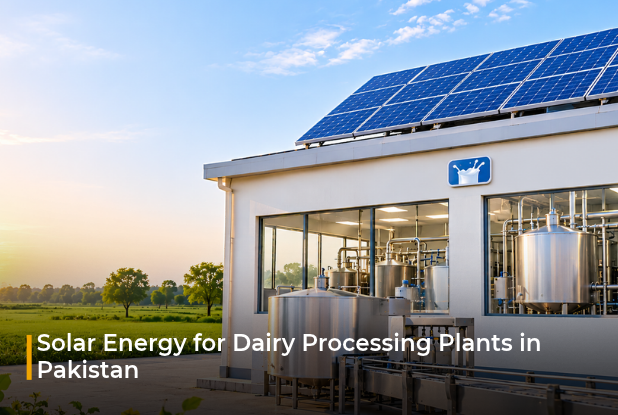
Pakistan's dairy industry plays an important role in the country's agricultural economy and food supply chain. From milk collection and processing to pasteurization, packaging, refrigeration, and distribution, dairy businesses rely on consistent energy to maintain product quality and operational efficiency.
Dairy processing facilities require electricity for cooling systems, refrigeration units, compressors, pumps, processing machinery, lighting, and automated packaging equipment. Any disruption in electricity supply can affect production schedules, temperature control, and the quality of temperature-sensitive products.
With electricity costs influencing production expenses, dairy manufacturers are increasingly exploring renewable energy solutions to improve cost management and operational reliability.
Solar energy offers a practical way to reduce dependence on grid electricity while supporting energy-intensive dairy operations. When combined with Battery Energy Storage Systems (BESS), solar can also provide additional flexibility for power backup and energy management.
For dairy businesses searching for the best solar company in Pakistan, Beacon Energy offers industrial and commercial solar solutions designed to support high-consumption facilities and long-term energy efficiency.
2. Understanding Energy Consumption in Dairy Processing Plants
Dairy processing involves several stages that require reliable electricity and careful temperature control. After milk arrives at a processing facility, it must be handled, cooled, processed, packaged, and stored under appropriate conditions to maintain product safety and quality.
Refrigeration is one of the most important electricity requirements in dairy operations. Chilling systems, compressors, cold rooms, and temperature-controlled storage facilities help maintain suitable conditions for milk and other dairy products.
Processing equipment also consumes electricity. Pumps, separators, homogenizers, packaging lines, ventilation systems, and automated controls operate throughout production.
Pasteurization and other thermal processes require heating energy, which may come from steam, hot water, electricity, or other energy sources depending on the facility's equipment. Conventional solar photovoltaic systems primarily address electrical consumption rather than directly replacing all process heating requirements.
Dairy plants may operate beyond normal daytime hours, particularly when production schedules, milk collection, and cold-chain operations require continuous activity.
These characteristics make energy planning especially important. Businesses must understand their electricity consumption, production schedules, cooling requirements, and critical loads before selecting a solar system.
Beacon Energy's Industrial & Commercial Solar Solutions help businesses explore renewable energy systems designed around operational requirements and electricity demand.
3. How Solar Energy Reduces Electricity Costs in Dairy Manufacturing
Solar energy allows dairy processing facilities to generate electricity directly from sunlight and use it during daily operations.
During daylight hours, a properly designed solar system can support electrical loads such as refrigeration compressors, milk transfer pumps, processing equipment, packaging machinery, lighting, and administrative operations.
By using solar electricity directly, dairy businesses can reduce the amount of electricity purchased from the grid. This helps lower operating expenses and improves long-term energy cost management.
Many dairy processing plants also have factory rooftops, warehouses, storage buildings, or available land that may be suitable for solar installation. These spaces can be converted into productive energy assets without significantly changing existing manufacturing processes.
However, every dairy facility has different requirements. Solar system design should consider electricity consumption, operating hours, refrigeration demand, available installation space, and the facility's existing electrical infrastructure.
Self-consumption is particularly important. When solar generation matches the facility's daytime energy needs, the business can use more of the electricity it produces rather than relying on grid exports.
Businesses evaluating the best solar companies in Pakistan should therefore consider technical expertise, equipment quality, system monitoring, project experience, and after-sales support.
Beacon Energy's industrial solar solutions are designed to support businesses with substantial electricity requirements, including food-related manufacturing, beverage production, refrigeration, and other industrial applications.
Dairy manufacturers can also explore Beacon Energy's grid-tied solar solutions to understand how solar systems can integrate with existing electricity infrastructure and reduce grid consumption during normal operations.
4. Role of BESS in Dairy Processing and Cold Storage
Dairy processing plants require reliable electricity because refrigeration and temperature control are essential for maintaining product quality.
Although solar energy can reduce daytime electricity costs, production and cooling requirements often continue after sunset. Power outages may also interrupt refrigeration equipment, processing machinery, and monitoring systems.
Battery Energy Storage Systems, commonly known as BESS, can help dairy businesses manage these requirements by storing electricity and supplying it when needed.
When integrated with solar, BESS can store surplus energy generated during the day and make it available during evening operations, peak demand periods, or grid interruptions.
A properly designed battery storage system can support selected critical loads, including refrigeration controls, monitoring equipment, essential pumps, lighting, and appropriately sized cooling systems.
Battery storage may also reduce dependence on diesel generators. In facilities where generators are already installed, BESS can complement existing backup infrastructure and reduce generator runtime under suitable operating conditions.
However, battery storage must be designed according to actual electrical requirements. Refrigeration compressors and industrial motors can draw high starting currents, making inverter capacity, battery discharge performance, and backup duration important technical considerations.
Beacon Energy's BESS solutions offer commercial and industrial energy storage capabilities, including renewable energy integration, intelligent energy management, generator support, and power reliability features.
Dairy businesses can also explore Beacon Energy's selected cold storage projects to learn more about its experience with electricity-intensive, temperature-controlled facilities.
5. Long-Term Benefits of Solar Energy for Dairy Industries
Solar energy offers dairy manufacturers several advantages beyond reducing monthly electricity bills.
One of the most important benefits is improved operating cost predictability. Dairy processing facilities require electricity throughout production, making energy expenses an important part of manufacturing budgets. Generating electricity on-site can reduce exposure to changing grid tariffs.
Another advantage is better use of available infrastructure. Factory rooftops, parking areas, and suitable open land can be used for solar generation, allowing businesses to turn existing space into a productive asset.
When combined with appropriately sized BESS, solar can also improve operational resilience. Stored electricity can support selected critical loads during outages and help reduce disruption to temperature-sensitive operations.
Solar energy supports sustainability objectives as well. Dairy processors that adopt renewable electricity can reduce emissions associated with conventional power generation and demonstrate progress toward responsible manufacturing practices.
This can be valuable for businesses supplying retail chains, food service companies, distributors, and customers who prioritize sustainability and responsible sourcing.
Monitoring is another important consideration. Modern solar systems allow businesses to track energy generation, equipment performance, and electricity consumption. This information helps facility managers identify performance issues and improve energy planning.
Routine maintenance, inspection, and cleaning also help maintain long-term solar production. For industrial facilities, proper maintenance planning is essential for protecting the value of the investment.
Beacon Energy's support services include system monitoring and technical assistance to help commercial and industrial customers maintain reliable solar performance.
Dairy manufacturers can also review Beacon Energy's project portfolio, featuring installations across beverage manufacturing, food-related businesses, cold storage, and other commercial and industrial applications.
6. Beacon Energy: Smart Solar and BESS Solutions for Dairy Processing Plants
Dairy processing facilities need energy systems designed around refrigeration, production schedules, processing equipment, critical electrical loads, and long-term business requirements.
A standard solar package may not be suitable for every dairy manufacturer. Effective system planning requires an understanding of electricity consumption, available installation space, electrical infrastructure, and opportunities for integrating battery storage.
Beacon Energy provides renewable energy solutions for commercial and industrial businesses seeking improved electricity cost management, reliable power infrastructure, and sustainable operations.
Through its Industrial & Commercial Solar Solutions, Beacon Energy supports manufacturers in adopting solar systems designed to match their energy requirements.
Its Battery Energy Storage Systems provide additional options for energy storage, backup power, and intelligent management of electricity consumption.
For dairy manufacturers comparing the best solar companies in Pakistan, evaluating proven project experience and technical support is essential. Beacon Energy's industrial and commercial project portfolio includes beverage manufacturing, cold storage, and other high-consumption business environments relevant to dairy processing requirements.
Businesses can also learn about Beacon Energy's renewable energy experience through its company profile and explore practical energy insights on the Beacon Energy blog.
As Pakistan's dairy sector continues to develop, solar energy can play an important role in improving energy efficiency, reducing grid dependency, and supporting more sustainable processing operations.
By combining properly designed solar generation with intelligent monitoring and suitable battery storage, dairy manufacturers can build more efficient and resilient electricity systems while protecting their long-term operational interests.
Looking for reliable solar and battery storage solutions for your dairy processing facility? Explore Beacon Energy's industrial solar systems, learn more about BESS technology, or contact Beacon Energy to discuss an energy solution tailored to your dairy manufacturing operations.