Factories in Pakistan are under constant pressure due to increasing electricity prices. For manufacturing units, textile mills, food processing plants, warehouses, cold storage facilities, and industrial businesses, electricity is one of the largest operating expenses.
As energy costs rise, factories need practical solutions to reduce monthly bills and improve long-term cost control. Industrial solar solutions are one of the most effective ways to achieve this.
By installing a properly designed solar system, factories can generate their own electricity, reduce grid dependency, and protect their business from rising power costs.
For reliable industrial solar solutions in Pakistan, Beacon Energy provides smart energy systems designed for commercial and industrial customers.
Why Factories Need Solar Energy
Factories usually consume electricity throughout the day. Heavy machinery, motors, compressors, cooling systems, lighting, pumps, and production lines require continuous power. This makes electricity a major part of production cost.
When electricity tariffs increase, factory owners face higher operating expenses. These rising costs can affect product pricing, profit margins, and business competitiveness.
Solar energy gives factories an opportunity to produce their own power during daylight hours. Since many factories operate during the day, solar generation matches their energy usage pattern very well.
This makes industrial solar a practical and cost-effective solution for factories in Pakistan.
How Industrial Solar Reduces Electricity Bills
Industrial solar systems reduce electricity bills by generating power from sunlight. During the day, solar panels produce electricity that can be used directly by the factory.
This reduces the number of units purchased from the grid. The more solar energy a factory uses, the greater the reduction in electricity bills.
For factories with high daytime consumption, solar can cover a significant portion of the load. This results in direct monthly savings and better control over energy expenses.
A professionally designed solar system can deliver savings for many years, making it a strong long-term investment.
Solar Self-Consumption for Factories
Solar self-consumption means using the electricity generated by solar panels within the factory instead of exporting it to the grid.
For industries, this is very beneficial because factories usually have high energy demand during the day. Solar electricity can be used immediately to run machinery, lighting, cooling systems, and other equipment.
Higher self-consumption means better savings because the factory uses its own solar power instead of buying expensive electricity from the grid.
This is one of the main reasons industrial solar systems are becoming popular in Pakistan.
Role of BESS in Reducing Factory Electricity Costs
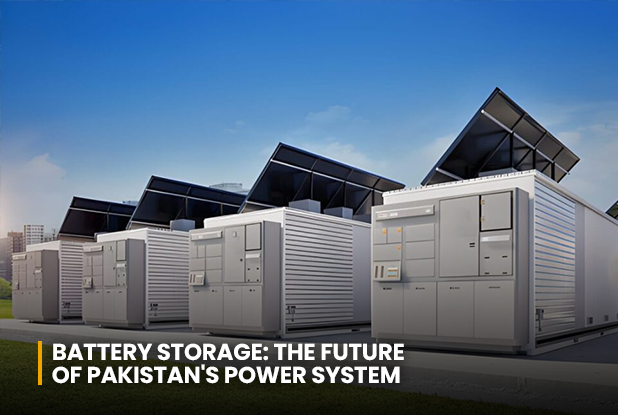
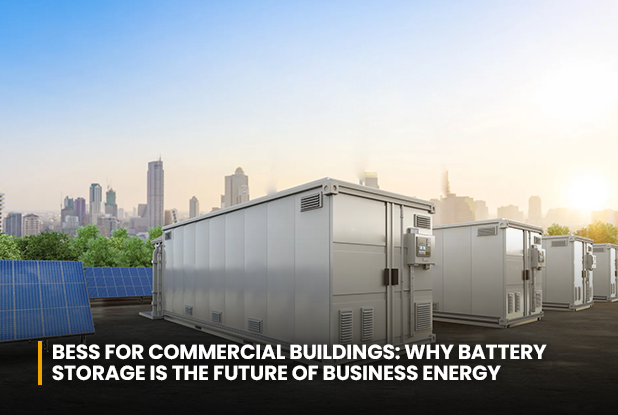
Battery Energy Storage Systems, also known as BESS, can make industrial solar even more effective. With BESS, factories can store extra solar energy and use it later when needed.
This is helpful during peak electricity hours, evening operations, or power outages. Instead of depending completely on the grid, the factory can use stored solar energy.
BESS also helps improve backup reliability and reduce production interruptions. For factories with critical operations, this can be extremely valuable.
A solar system combined with BESS gives factories more control over their electricity usage and energy costs.
Types of Industrial Solar Solutions
There are different types of industrial solar solutions depending on the factory’s requirements.
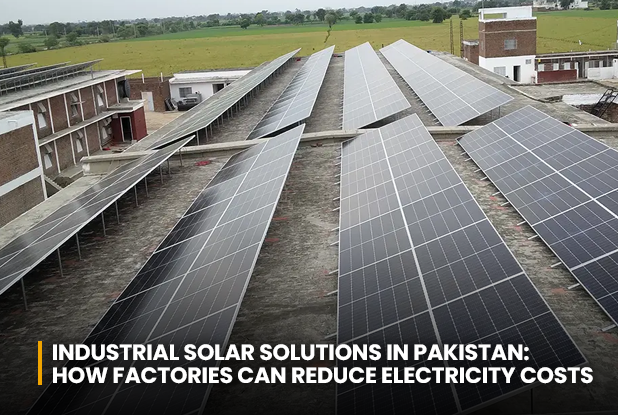
Rooftop solar systems are common for factories with large roof areas. These systems use existing rooftop space and are suitable for many industrial buildings.
Ground-mounted solar systems are ideal for businesses that have open land available. These systems can support larger capacities and are easier to access for maintenance.
On-grid solar systems are connected with the grid and mainly help reduce electricity bills.
Hybrid solar systems combine solar, grid, generator, and battery storage. These systems are useful for factories that need both cost savings and backup power.
The best option depends on the factory’s load, available space, working hours, budget, and backup requirements.
Why Proper System Design Is Important
Industrial solar is not a one-size-fits-all solution. Every factory has different power requirements, working hours, roof conditions, and load patterns.
Before installation, a professional solar company should review electricity bills, site layout, sanctioned load, transformer capacity, panel space, and future expansion plans.
Proper design ensures that the system produces maximum energy and delivers better savings.
A poorly designed system may not perform well and can create maintenance issues later. That is why choosing the right solar company is very important.
Beacon Energy for Industrial Solar Solutions in Pakistan
Beacon Energy provides solar energy solutions for industrial and commercial customers in Pakistan. The company helps businesses reduce electricity costs through customized solar systems designed according to their energy needs.
For factories, Beacon Energy can support the complete process, including consultation, system planning, installation, and support.
By choosing Beacon Energy, industries can move toward cleaner energy, better savings, and improved energy independence.